





Listed in Road Maintenance
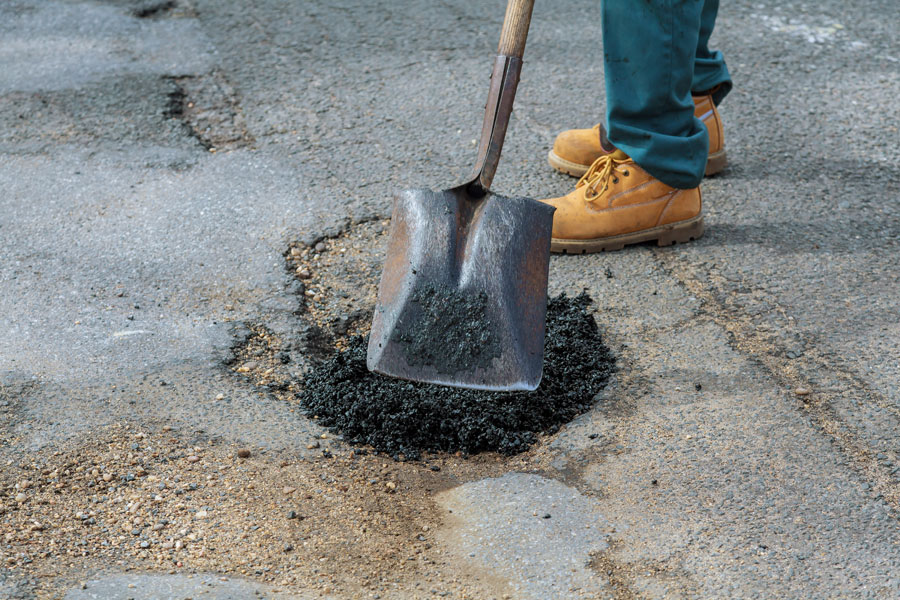
** A note about the image above: if I ever witnessed one of my workers filling a pothole while it had stones and sand in it, I would lose my shit. That's a waste of blacktop and it's never going to adhere. That pothole is too shallow anyway. The "repair" is replacing a divot with a speed bump. Anyway, I digress.
Every highway department has them. The potholes that seem almost immortal. You fill them in the spring, patch them again after a heavy rain, revisit them a few weeks later, and somehow they're back again before the snow has even finished melting. Every crew knows where they are. In fact, if you mention a particular intersection or stretch of road, someone will probably smile and say, "Yep, we'll be filling that one again next week."
Those recurring potholes may seem like just another part of the job, but they actually represent one of the hidden costs of road maintenance. The asphalt used to fill them isn't free. Neither is the truck, the fuel, the crew's time, or the disruption to traffic. When you add it all together, those "routine" repairs become surprisingly expensive.
The Most Expensive Pothole Is the One You Fill Over and Over
Most potholes can be repaired and remain stable for a reasonable amount of time. Others refuse to stay fixed. These are the potholes that appear in exactly the same location year after year, or even several times during the same year. Every time the pavement is patched, the repair eventually fails because the underlying problem was never corrected. The pavement may have lost its structural strength. Water may be entering through cracked asphalt. Drainage may be poor. The road base may have deteriorated. Heavy truck traffic may be placing stresses on the pavement that it was never designed to handle. The pothole is simply the visible symptom. Continuing to patch it without addressing the underlying cause is a little like repainting a ceiling stain without fixing the leaking roof.
The Costs Add Up Faster Than You Think
One trip to repair a pothole may not seem significant. But imagine a pothole that requires attention four or five times each year.
Now consider everything involved each time:
- The call from a resident.
- Dispatching a crew.
- Loading asphalt.
- Driving to the location.
- Setting up traffic control.
- Making the repair.
- Cleaning up.
- Returning to the shop.
Multiply that by dozens of recurring potholes across an entire town, and suddenly a considerable portion of the highway department's time is being spent repeating the same work. The public only sees a crew filling a pothole. The department sees the labor hours, fuel, equipment wear, material costs, scheduling challenges, and the work that didn't get completed because the crew was busy making yet another trip to the same location.
Recurring Potholes Are Valuable Information
I don't necessarily view recurring potholes as failures. I view them as data. When the same pothole requires repeated repairs, it is telling you something about the condition of the road. Perhaps that section should be resurfaced. Perhaps the shoulder drainage needs improvement. Perhaps a failed culvert is allowing water to saturate the road base. Or maybe the road has simply reached the end of its useful life. If departments record each repair, those patterns become impossible to ignore.
Memory Isn't Enough
Experienced highway employees often know exactly where the problem potholes are. Ask almost any crew member, and they'll point out the same handful of locations that always seem to come back. The challenge is that institutional knowledge eventually walks out the door. People retire. Employees move on. New supervisors take over. If the information only exists in someone's memory, it disappears with them. Documenting pothole repairs preserves that knowledge for the next generation of highway employees. Years later, someone reviewing the records may discover that a particular pothole has required twenty repairs over the last five years. That tells a far more compelling story than simply noticing another hole in the pavement.
Better Decisions Require Better Records
Imagine presenting a paving request to your town board. Instead of saying, "This road is in rough shape," you can say: "This road required forty-three pothole repairs over the last two years. Six individual potholes have each been repaired at least five times. We've used approximately three tons of patching material here, and crews have spent more than sixty labor hours making repeat repairs." That conversation changes completely. You're no longer relying on opinions. You're presenting evidence.
Reactive Maintenance Has Its Place
None of this means pothole repair is a waste of time. Far from it. Potholes create safety hazards, damage vehicles, allow more water into the pavement, and generate legitimate complaints from residents. Filling them promptly is one of the most visible and important services a highway department provides.
The goal isn't to stop repairing potholes. The goal is to recognize when repeated repairs are telling you that a different solution is needed. Sometimes the most economical repair isn't another shovel full of asphalt - it's resurfacing the road, improving drainage, replacing the failed section of pavement, or rebuilding the road base.
Every Repeat Repair Is Trying to Tell You Something
The potholes that come back again and again aren't just maintenance headaches. They're diagnostic tools. Each repeat repair is another piece of evidence that the pavement is failing in a predictable way. Departments that track those repairs gain valuable insight into where their maintenance dollars are going and where capital improvements will provide the greatest long-term benefit.
In the end, the objective isn't simply to fill potholes. It's to stop filling the same potholes over and over again. That starts with paying attention to what those recurring repairs are trying to tell us.
-- Roadwurx allows you to track your pothole reports and repairs. --