





Listed in Other Assets
Ask ten residents who is responsible for maintaining sidewalks in their town and you may receive ten different answers. Some assume the municipality handles everything. Others believe the adjacent property owner is fully responsible. In reality, sidewalk responsibility is often far more complicated than most people realize. In many communities, sidewalk ownership, maintenance, snow removal, repair responsibilities, and legal liability are divided among multiple parties. These responsibilities may be spread across towns, villages, cities, counties, state transportation agencies, homeowners, business owners, and even utility companies.
For highway and public works departments, the confusion can become especially frustrating when elected officials adopt policies that appear inconsistent or difficult to defend operationally.
Sidewalk Responsibility Is Often Split
One of the biggest misconceptions about sidewalks is that responsibility is handled by a single entity. In reality, different responsibilities are frequently assigned to different parties.
For example, a municipality may:
- Own the sidewalk infrastructure
- Repair damaged sidewalk panels
- Replace curb ramps
- Inspect sidewalk conditions
- Assume liability exposure for defects
At the same time, adjacent property owners may be required to:
- Clear snow and ice
- Trim vegetation
- Remove obstructions
- Report hazards
- Pay for sidewalk replacement under local ordinances
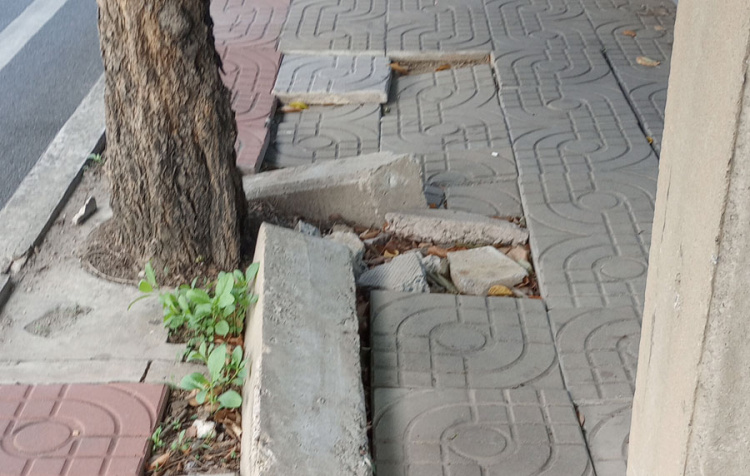
This division of responsibility can create confusion for both residents and municipal employees. A homeowner may assume the town is responsible because the sidewalk is within the public right-of-way. Meanwhile, the town may issue citations to the homeowner for failing to shovel snow after a storm.
Roads and Sidewalks May Have Different Owners
The situation becomes even more complicated when sidewalks are located adjacent to roads owned by another jurisdiction.
In some towns:
- The county owns the road
- The town owns the sidewalk
- Adjacent property owners must clear snow
- The state maintains traffic signals
- A utility company owns poles and underground infrastructure
In other cases, a municipality may be responsible for sidewalk snow removal along county roads or state highways even though the municipality has no responsibility for the roadway itself. These arrangements often develop over decades through local laws, informal practices, maintenance agreements, or political decisions that may no longer make operational sense. As a result, highway departments sometimes inherit sidewalk responsibilities that seem disconnected from roadway ownership or maintenance authority.
Snow and Ice Responsibilities Are Especially Confusing
Snow and ice removal is one of the most inconsistent areas of sidewalk responsibility. Many municipalities require adjacent property owners to clear sidewalks within a specified number of hours after snowfall ends. Failure to comply may result in warnings, fines, or municipal crews performing the work and billing the property owner. However, exceptions are common.
A municipality may choose to clear sidewalks:
- In downtown business districts
- Near schools
- Adjacent to municipal buildings
- Along county roads
- Along state highways
- Near senior housing or transit routes
In some communities, residential sidewalks are the homeowner's responsibility while sidewalks in commercial districts are maintained by municipal crews. These decisions are often driven by politics, pedestrian traffic, staffing levels, budget limitations, historical practices, or liability concerns rather than by consistent engineering or operational principles. From the perspective of a highway department, the resulting system can feel patchwork and difficult to administer.
Liability Does Not Always Follow Maintenance Responsibility
One of the most misunderstood aspects of sidewalk management is liability. A property owner may be required to shovel snow from a sidewalk but still not own the sidewalk itself. Likewise, a municipality may own the sidewalk but argue that the adjacent property owner bears responsibility for hazardous winter conditions.
Liability often depends on several factors, including:
- State laws
- Local ordinances
- Prior court decisions
- Whether notice of the hazard existed
- Whether reasonable maintenance occurred
- Whether the defect was created by a party's actions
In some states, municipalities retain most sidewalk liability exposure regardless of local snow removal ordinances. In others, adjacent property owners may face substantial exposure if they fail to comply with maintenance requirements. The outcome is often highly fact-specific. This uncertainty is one reason why sidewalk claims and trip-and-fall lawsuits remain a major concern for municipalities.
Why Policies Sometimes Seem Illogical
Public works and highway employees often encounter sidewalk policies that appear inconsistent or inefficient.
For example:
- A town may maintain sidewalks in one neighborhood but not another
- Snow may be cleared on one county road but not another
- One department may inspect sidewalks while another handles repairs
- Sidewalk replacement costs may shift between taxpayers and homeowners depending on location
- Certain sidewalks may receive priority because of political pressure rather than condition
These systems are often the result of decades of policy decisions layered on top of one another. A sidewalk program created in the 1970s may have been expanded in the 1990s, modified after a lawsuit in the 2000s, and adjusted again after staffing reductions or budget shortfalls. Over time, the result can become difficult for residents, elected officials, and even municipal staff to fully understand.
The Importance of Clear Policies
Because sidewalk responsibilities can become so confusing, municipalities benefit greatly from adopting clear written policies.
A good sidewalk policy should clearly define:
- Who owns sidewalks
- Who performs inspections
- Who repairs defects
- Who clears snow and ice
- Response time requirements
- Enforcement procedures
- Responsibility for vegetation control
- Cost-sharing arrangements
- Procedures for reporting hazards
Public education is equally important. Residents are far more likely to comply with maintenance requirements when responsibilities are communicated clearly and consistently.
Coordination Between Departments Matters
Sidewalk responsibilities often overlap between:
- Highway departments
- Public works departments
- Engineering departments
- Code enforcement
- Risk management
- Planning departments
- Legal counsel
Without coordination, important issues can fall through the cracks. For example, a highway department may identify hazardous sidewalk conditions but lack authority to order repairs. Meanwhile, code enforcement may have enforcement authority but no inspection program. Strong communication between departments helps reduce confusion and improve response times.
Sidewalks Are More Complicated Than They Appear
To most residents, a sidewalk may seem like a simple strip of concrete. Behind the scenes, however, sidewalk ownership, maintenance, snow removal, repair obligations, and liability exposure can become surprisingly complex. For municipal employees working in road maintenance and public works, these arrangements do not always appear logical or efficient. Many current policies are the product of decades of evolving local decisions rather than a single coordinated strategy. Understanding who is responsible for sidewalks requires looking beyond the pavement itself and examining the ordinances, agreements, practices, and legal framework that support it.